Beware of the Form 5102 Scam: Don’t Fall for This Fake Government Notice
Andy Scheu • June 27, 2025

What Is the “Form 5102” Scam?

Businesses across the U.S. are receiving official-looking letters labeled Form 5102 – Payment Compliance Notification, supposedly issued by a government agency such as the U.S. Business Regulations Department or a similar made-up entity. The form demands payment to avoid non-compliance with federal labor or tax laws.


Let’s be clear: Form 5102 is NOT a legitimate IRS, Department of Labor, or state agency document.


These scams are designed to look urgent and official to trick businesses—especially small and mid-sized ones—into sending payments or disclosing sensitive information.


🚩 Red Flags to Watch Out For


Here are some warning signs that a Form 5102 notice is fake:

  • The letter references agencies that do not exist, such as the “U.S. Business Regulations Department.”
  • The form includes threatening language, warning of penalties or legal consequences if immediate action is not taken.
  • It demands a payment for compliance processing—typically between $90 and $150.
  • The envelope or return address is from a private business rather than a federal or state agency.
  • It urges you to respond via mail or fax to a PO box or third-party compliance service.


✅ What to Do If You Receive One


If you or your team receive a Form 5102 notice:

  1. Do not send payment or provide any personal or business information.
  2. Take a photo or scan of the document and report it to the Federal Trade Commission (FTC) at https://reportfraud.ftc.gov.
  3. Let us know at Time & Pay. We’ll help you confirm whether any notices are legitimate.
  4. Shred the document and instruct your staff not to engage with it.


🛡 How Time & Pay Helps Protect Your Business


Scammers target businesses because they know that payroll, compliance, and HR processes are often complicated. As your payroll partner, we stay informed about threats like these so you don’t have to.

If you ever receive an unfamiliar form or notice and aren't sure if it's real, send it to us—we’re happy to verify it for you.


💬 Final Thoughts

Government impersonation scams are on the rise, and Form 5102 is just one of many tricks bad actors are using to steal money from small businesses. Stay skeptical, verify everything, and rely on trusted partners like Time & Pay to keep your business protected.

If in doubt, don’t respond—reach out.


Contact Us
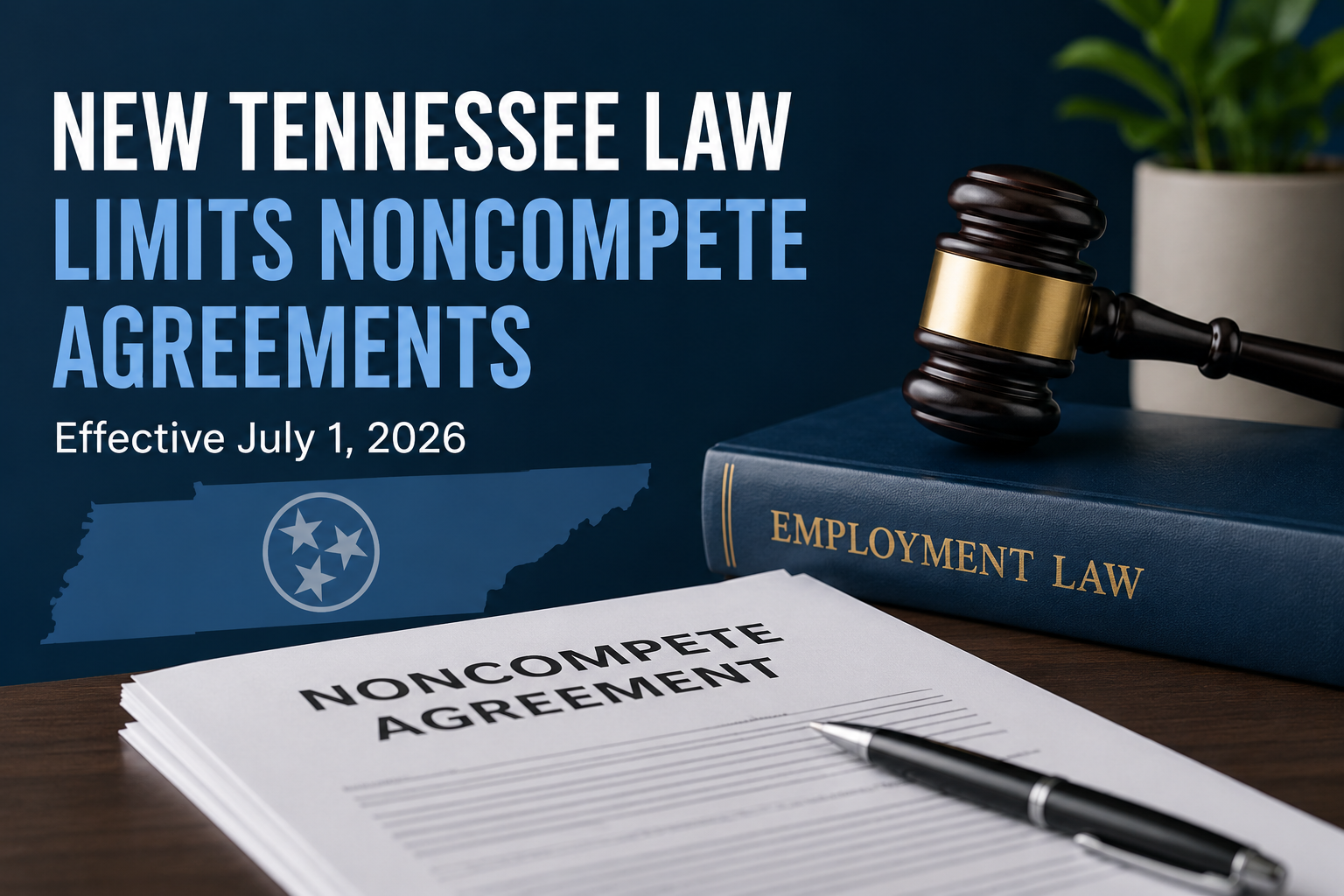
By Andy Scheu May 14, 2026
Tennessee employers should prepare for new noncompete restrictions taking effect July 1, 2026. Learn what the law means for your business and employment agreements.
By Andy Scheu May 7, 2026
Learn how new paid leave laws, AI employment regulations, and multi-state HR compliance trends are impacting employers in 2026 — and what businesses should do now to stay prepared.
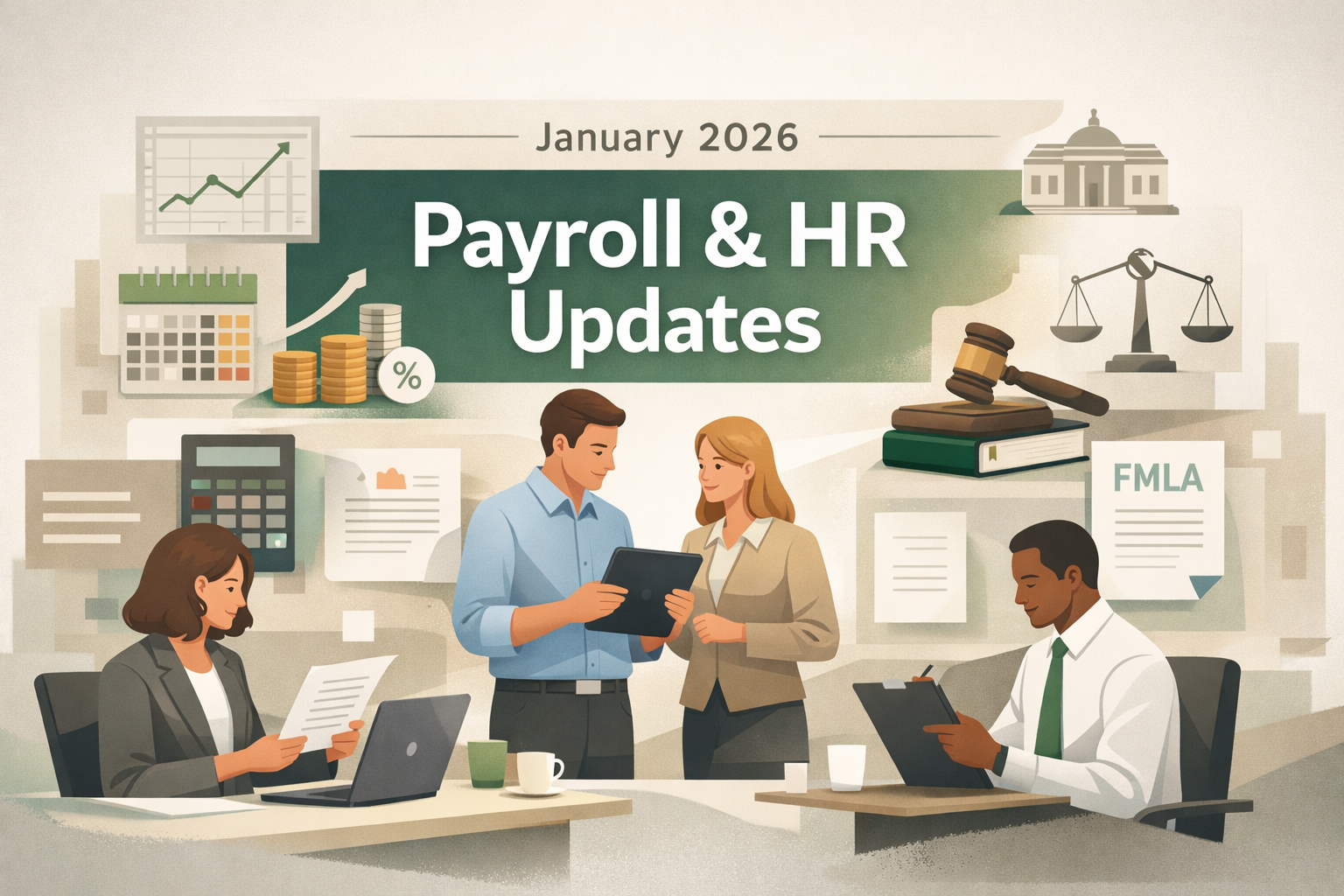
Payroll & HR updates graphic with people reviewing documents. Includes a graph, coins, scales, books, and a gavel.
By Andy Scheu January 28, 2026
Key Employment & Payroll Updates Employers Should Know – January 2026 Staying compliant as an employer means keeping up with changes that affect wages, workplace policies, and employee leave. As we head into 2026, several federal updates are worth your attention—particularly around earnings trends, harassment guidance, and Family and Medical Leave Act (FMLA) administration. Here’s a breakdown of what changed and what it means for employers. Real Average Hourly Earnings Remained Flat in December 2025 According to the U.S. Bureau of Labor Statistics , real average hourly earnings for all U.S. employees were unchanged from November to December 2025. While average hourly earnings increased by 0.3 percent during the month, that increase was offset by a matching 0.3 percent rise in the Consumer Price Index (CPI). In other words, workers saw nominal wage growth, but inflation absorbed those gains. Looking year over year, real average hourly earnings rose 1.1 percent from December 2024 to December 2025. Why this matters for employers: Flat real wage growth can influence employee sentiment, retention, and compensation planning. Even when wages increase on paper, employees may not feel the benefit if inflation keeps pace. Employers evaluating pay strategies in 2026 should factor in cost-of-living pressures alongside competitive wage benchmarking. EEOC Rescinds 2024 Harassment Guidance on Gender Identity The U.S. Equal Employment Opportunity Commission has voted to rescind its 2024 Enforcement Guidance on Harassment in the Workplace. That guidance relied heavily on the Bostock v. Clayton County decision, which held that discrimination based on sexual orientation or gender identity constitutes sex discrimination under Title VII of the Civil Rights Act. The rescinded guidance included examples such as the intentional misuse of pronouns or denying access to bathrooms consistent with an individual’s gender identity. The revocation follows a 2025 federal court ruling in Texas that struck down the guidance. Why this matters for employers: While the specific EEOC guidance has been withdrawn, the underlying Supreme Court precedent has not changed. Employers should avoid assuming this revocation eliminates risk. Title VII protections still apply, and workplace harassment claims may still be evaluated under existing federal law, state law, and company policy. This is a good time to review harassment policies and training materials with legal counsel. DOL Clarifies How Travel Time Applies Under FMLA The U.S. Department of Labor , through its Wage and Hour Division, has issued a new Opinion Letter clarifying how travel time can count toward an employee’s FMLA entitlement. The guidance confirms that time spent traveling to and from medical appointments may be counted as FMLA leave when the travel is related to receiving care for a serious health condition. Importantly, healthcare providers are not required to estimate or certify travel time. The DOL provided several practical examples: • Travel time to and from a dialysis appointment, along with treatment time that overlaps with scheduled work hours, is FMLA-protected. • When an employee transports a parent to medical appointments for a serious health condition, all time spent traveling, waiting, attending the appointment, and returning to work may be counted as FMLA leave—even if the appointment itself is brief. • Leave taken for activities unrelated to medical care, such as accompanying a child on a school field trip, is not FMLA-protected—even if the child has a serious health condition. • Only the portion of leave related to medical care and necessary travel is protected; unrelated personal errands cannot be counted against FMLA entitlement. Why this matters for employers: This clarification reinforces the need for accurate FMLA tracking. Employers should ensure supervisors and HR teams understand that intermittent leave may include more than just appointment time. Clear policies and consistent documentation practices can help prevent miscounts, disputes, and compliance issues. Final Takeaway for Employers These updates highlight a common theme: compliance is rarely static. Wage trends affect workforce expectations, court decisions influence policy enforcement, and regulatory guidance continues to evolve.  Employers should consider reviewing: • Compensation strategies for 2026 • Harassment policies and training materials • FMLA tracking and leave administration procedures Staying proactive reduces risk—and helps build trust with employees in an increasingly complex regulatory environment. Sources & Reference URLs • U.S. Bureau of Labor Statistics – Real Earnings News Release https://www.bls.gov/news.release/realer.htm • U.S. Equal Employment Opportunity Commission – Enforcement Guidance Updates https://www.eeoc.gov • Bostock v. Clayton County (2020) – Supreme Court Decision https://www.supremecourt.gov/opinions/19pdf/17-1618_hfci.pdf • U.S. Department of Labor – Wage and Hour Division Opinion Letters https://www.dol.gov/agencies/whd/opinion-letters • Family and Medical Leave Act (FMLA) Overview https://www.dol.gov/agencies/whd/fmla