New Tennessee Law Limits Noncompete Agreements for Lower-Wage Employees
Andy Scheu • May 14, 2026

Tennessee employers should prepare for major noncompete agreement changes beginning in 2026

Tennessee employers should be aware of an important legal update that could impact employment agreements and hiring practices beginning next year.


Governor Bill Lee has signed new legislation that restricts the use of noncompete agreements for certain employees, creating new compliance requirements for businesses across the state.


What’s Changing?


Effective July 1, 2026, Tennessee employers will no longer be permitted to require, request, or enforce noncompete agreements for employees earning less than $70,000 per year.

For hourly employees, compensation is annualized using a standard calculation of:


  • 40 hours per week
  • 52 weeks per year


That means an hourly employee earning below the equivalent annual threshold would generally be protected under this law.


Any noncompete agreement that violates this new requirement will be considered void and unenforceable.


What About Existing Agreements?


The law is not retroactive, which means existing noncompete agreements are not automatically invalidated.


However, employers should be cautious.  The law will apply to any agreement that is:

  • Newly entered into
  • Amended
  • Renewed


…on or after July 1, 2026.


Even making changes to an existing agreement after that date could bring it under the new law.


Additional Change: Restrictive Covenant Time Limits


The legislation also addresses the enforceability of restrictive covenants more broadly.


Under the new law, Tennessee courts will presume a restrictive covenant is reasonable if it lasts two years or less when enforcement is sought against a former employee or independent contractor.


While this doesn’t automatically guarantee enforceability, it does provide clearer guidance around what courts may view as a reasonable timeframe.


What Tennessee Employers Should Do Now


If your company uses noncompete agreements as part of hiring or retention practices, now is a good time to review your employment documents and policies before the law takes effect.

Key action items:


✓ Review current noncompete agreements
✓ Identify employees earning below the new compensation threshold
✓ Evaluate renewal or amendment plans for existing agreements
✓ Consult legal or HR advisors before updating employment contracts


Employment law changes can create compliance risks if policies are not updated correctly.

If you have questions about how this new Tennessee law may affect your business, the HR professionals at SESCO Management Consultants can help. Contact them at 423-764-4127 or sesco@sescomgt.com for guidance.


Contact Us
By Andy Scheu • November 9, 2026
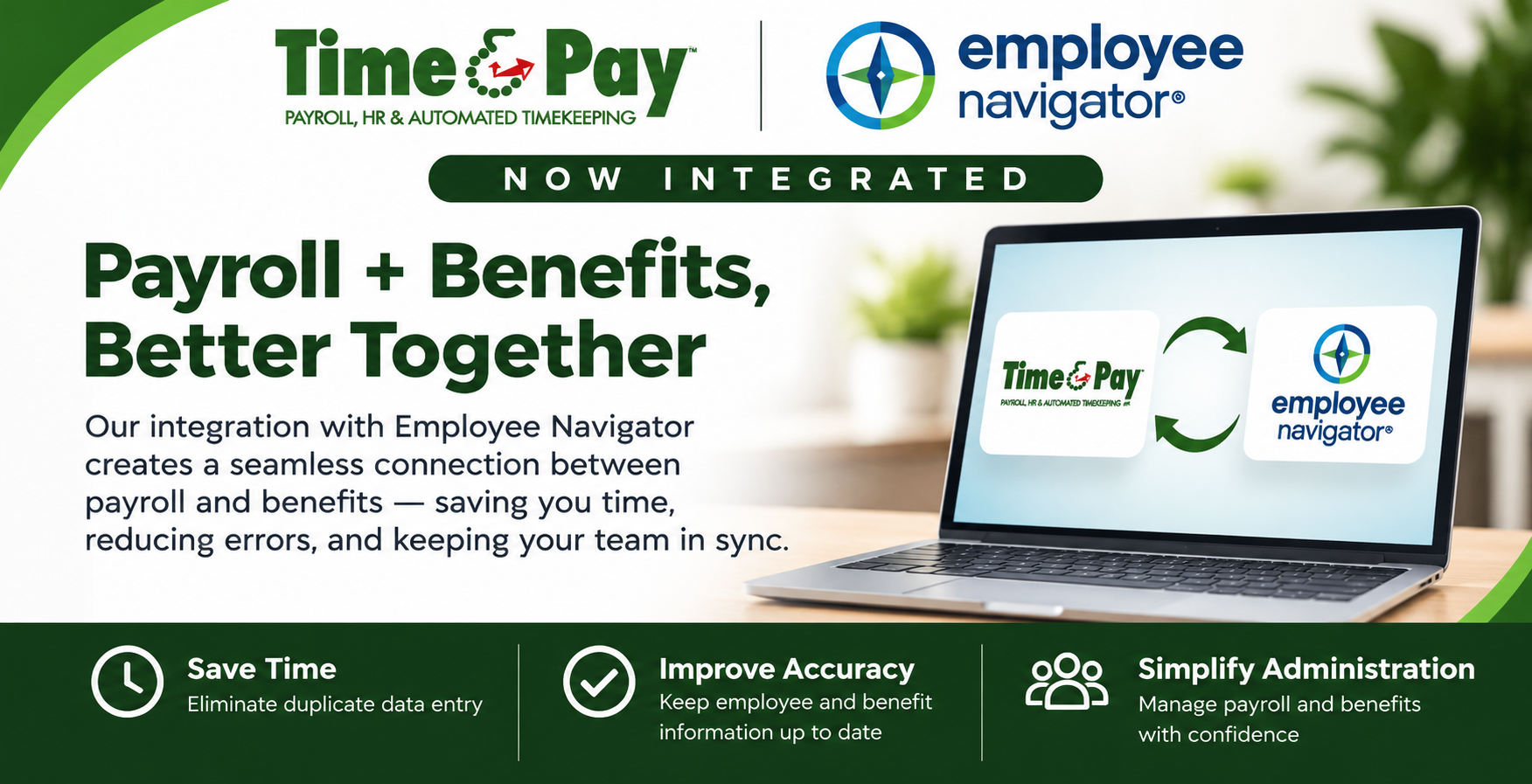
Time & Pay now integrates with Employee Navigator. Discover how connected payroll and benefits administration reduces manual work and improves accuracy.
By Andy Scheu • May 7, 2026
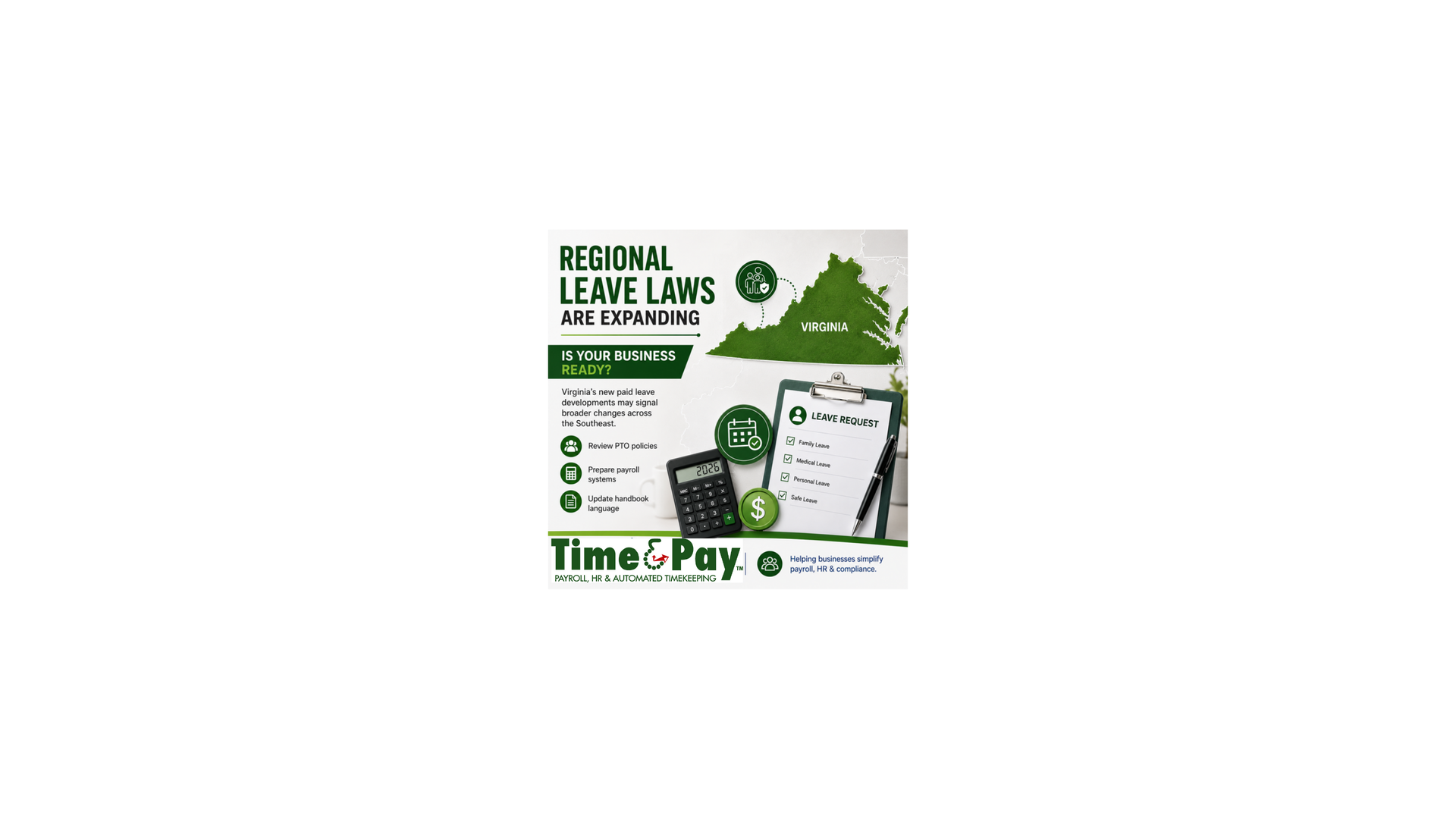
Learn how new paid leave laws, AI employment regulations, and multi-state HR compliance trends are impacting employers in 2026 — and what businesses should do now to stay prepared.
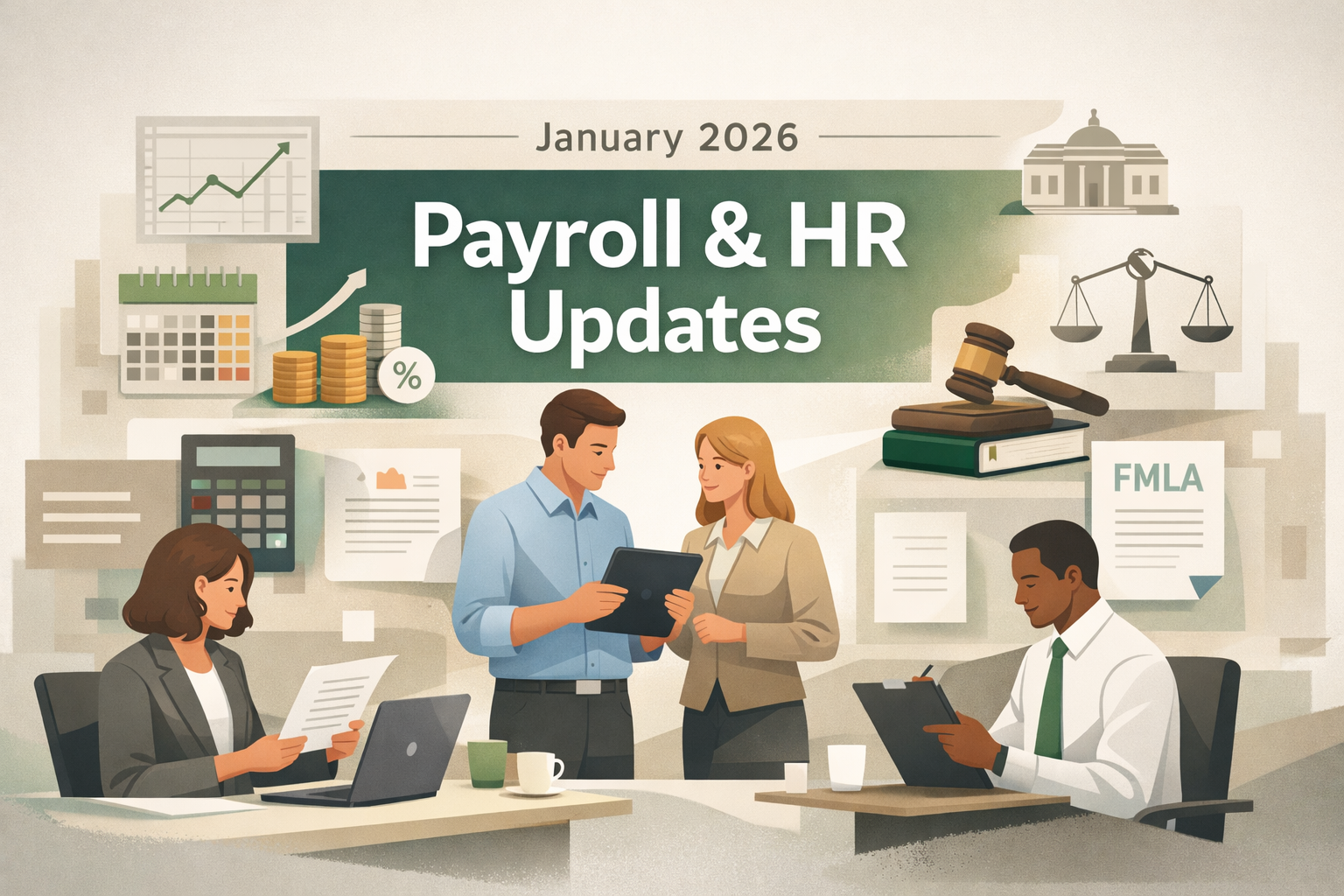
Payroll & HR updates graphic with people reviewing documents. Includes a graph, coins, scales, books, and a gavel.
By Andy Scheu • January 28, 2026
Key Employment & Payroll Updates Employers Should Know – January 2026 Staying compliant as an employer means keeping up with changes that affect wages, workplace policies, and employee leave. As we head into 2026, several federal updates are worth your attention—particularly around earnings trends, harassment guidance, and Family and Medical Leave Act (FMLA) administration. Here’s a breakdown of what changed and what it means for employers. Real Average Hourly Earnings Remained Flat in December 2025 According to the U.S. Bureau of Labor Statistics , real average hourly earnings for all U.S. employees were unchanged from November to December 2025. While average hourly earnings increased by 0.3 percent during the month, that increase was offset by a matching 0.3 percent rise in the Consumer Price Index (CPI). In other words, workers saw nominal wage growth, but inflation absorbed those gains. Looking year over year, real average hourly earnings rose 1.1 percent from December 2024 to December 2025. Why this matters for employers: Flat real wage growth can influence employee sentiment, retention, and compensation planning. Even when wages increase on paper, employees may not feel the benefit if inflation keeps pace. Employers evaluating pay strategies in 2026 should factor in cost-of-living pressures alongside competitive wage benchmarking. EEOC Rescinds 2024 Harassment Guidance on Gender Identity The U.S. Equal Employment Opportunity Commission has voted to rescind its 2024 Enforcement Guidance on Harassment in the Workplace. That guidance relied heavily on the Bostock v. Clayton County decision, which held that discrimination based on sexual orientation or gender identity constitutes sex discrimination under Title VII of the Civil Rights Act. The rescinded guidance included examples such as the intentional misuse of pronouns or denying access to bathrooms consistent with an individual’s gender identity. The revocation follows a 2025 federal court ruling in Texas that struck down the guidance. Why this matters for employers: While the specific EEOC guidance has been withdrawn, the underlying Supreme Court precedent has not changed. Employers should avoid assuming this revocation eliminates risk. Title VII protections still apply, and workplace harassment claims may still be evaluated under existing federal law, state law, and company policy. This is a good time to review harassment policies and training materials with legal counsel. DOL Clarifies How Travel Time Applies Under FMLA The U.S. Department of Labor , through its Wage and Hour Division, has issued a new Opinion Letter clarifying how travel time can count toward an employee’s FMLA entitlement. The guidance confirms that time spent traveling to and from medical appointments may be counted as FMLA leave when the travel is related to receiving care for a serious health condition. Importantly, healthcare providers are not required to estimate or certify travel time. The DOL provided several practical examples: • Travel time to and from a dialysis appointment, along with treatment time that overlaps with scheduled work hours, is FMLA-protected. • When an employee transports a parent to medical appointments for a serious health condition, all time spent traveling, waiting, attending the appointment, and returning to work may be counted as FMLA leave—even if the appointment itself is brief. • Leave taken for activities unrelated to medical care, such as accompanying a child on a school field trip, is not FMLA-protected—even if the child has a serious health condition. • Only the portion of leave related to medical care and necessary travel is protected; unrelated personal errands cannot be counted against FMLA entitlement. Why this matters for employers: This clarification reinforces the need for accurate FMLA tracking. Employers should ensure supervisors and HR teams understand that intermittent leave may include more than just appointment time. Clear policies and consistent documentation practices can help prevent miscounts, disputes, and compliance issues. Final Takeaway for Employers These updates highlight a common theme: compliance is rarely static. Wage trends affect workforce expectations, court decisions influence policy enforcement, and regulatory guidance continues to evolve.  Employers should consider reviewing: • Compensation strategies for 2026 • Harassment policies and training materials • FMLA tracking and leave administration procedures Staying proactive reduces risk—and helps build trust with employees in an increasingly complex regulatory environment. Sources & Reference URLs • U.S. Bureau of Labor Statistics – Real Earnings News Release https://www.bls.gov/news.release/realer.htm • U.S. Equal Employment Opportunity Commission – Enforcement Guidance Updates https://www.eeoc.gov • Bostock v. Clayton County (2020) – Supreme Court Decision https://www.supremecourt.gov/opinions/19pdf/17-1618_hfci.pdf • U.S. Department of Labor – Wage and Hour Division Opinion Letters https://www.dol.gov/agencies/whd/opinion-letters • Family and Medical Leave Act (FMLA) Overview https://www.dol.gov/agencies/whd/fmla